

The narrative of African entrepreneurship has long been dominated by the “hustle”- that gritty, relentless determination to turn nothing into something through sheer force of will. In the food sector, this spirit is palpable. From the bustling processing hubs in Lagos to the boutique agro-processors in Nairobi, the continent is teeming with culinary ambition. Yet, a sobering reality remains: passion is not a strategy. While thousands of food startups are birthed in hope each year, the vast majority succumb to a silent, systemic erosion long before they reach their fifth anniversary. The failure of these enterprises is rarely due to a lack of market demand or entrepreneurial talent. Instead, it is a structural failure. We are witnessing a collision between visionary ambition and fragile, fragmented systems that were never designed to support scale. To transform Africa’s trillion-dollar food opportunity from a theoretical projection into a tangible reality, we must shift our focus from the art of selling food to the science of building food institutions.
The primary trap for the African food founder is the seductive nature of early success. Most ventures begin in a high-touch, artisanal environment -a home kitchen or a small-scale facility where the founder oversees every gram of seasoning and every delivery. In this phase, the business thrives on the founder’s personal energy. However, this model is fundamentally unscalable. When demand spikes, the very “hustle” that initiated the business becomes its greatest liability. Without standardized systems, the transition from a craft to an industry is where the collapse begins. Scaling is not merely doing more of what you are currently doing; it is the process of replacing human intuition with repeatable, data-driven systems. In the absence of these structures, growth does not lead to prosperity; it leads to chaos.
The Infrastructure of Reliability: Rethinking the Supply Chain
At the heart of every failed food startup lies a fractured supply chain. In many African markets, food sourcing remains an exercise in uncertainty. Founders often rely on informal networks, purchasing raw materials from open-air markets or smallholder farmers without formal agreements. This dependency on the “spot market” leaves a business vulnerable to extreme price volatility, seasonal scarcity, and inconsistent quality. When a startup attempts to secure a contract with a major retailer or an international distributor, these vulnerabilities are exposed. A retailer does not just buy a product; they buy the assurance that the product will be on the shelf every Tuesday at the same price and quality.
Successful food enterprises on the continent have realized that they cannot simply be buyers of ingredients; they must be architects of ecosystems. This involves a radical move toward vertical integration or the creation of tightly managed out-grower schemes. By investing in cold-chain logistics, decentralized aggregation centers, and long-term partnerships with producers, a startup de-risks its most critical input. The goal is to move away from the “transactional” relationship with the farm and toward a “transformational” one. When you control the value chain, you control your destiny. Without this control, you are merely a passenger in a volatile commodity market.
The Financial Lung: Cash Flow as a Prerequisite for Survival
A profound paradox in the food industry is that a company can be highly profitable on its income statement while being completely insolvent in its bank account. Cash flow is the oxygen of the food business, and in the African context, that oxygen is often thin. The sector is characterized by a brutal misalignment of payment cycles. Suppliers and farmers typically require immediate payment, often in cash, while large-scale distributors and supermarket chains may operate on sixty-day or ninety-day credit cycles. For a growing startup, this gap is a death trap.
The inability to manage working capital is perhaps the single most frequent cause of business closure. As sales grow, the amount of cash locked up in inventory and accounts receivable increases exponentially. Without sophisticated financial controls, a startup literally grows itself into bankruptcy. To survive, founders must move beyond basic bookkeeping and embrace rigorous inventory forecasting and cost-accounting. They must understand their unit economics with surgical precision, accounting for spoilage, logistics leakage, and the cost of capital. In the world of food, margins are thin and mistakes are expensive. Financial discipline is not just an administrative task; it is a core competitive advantage.
The Standard of Excellence: From Craft to Industry
Consistency is the currency of brand trust. For a food brand, the consumer’s expectation is absolute: the product must taste, feel, and look exactly the same every single time it is consumed. In the early stages of a startup, this consistency is maintained by the founder’s physical presence. But as production moves to multiple shifts or various locations, that “founder’s touch” vanishes. This is the moment of truth for many African startups. If the recipes are not documented, if the standard operating procedures are not codified, and if quality assurance is not automated, the brand equity begins to hemorrhage.
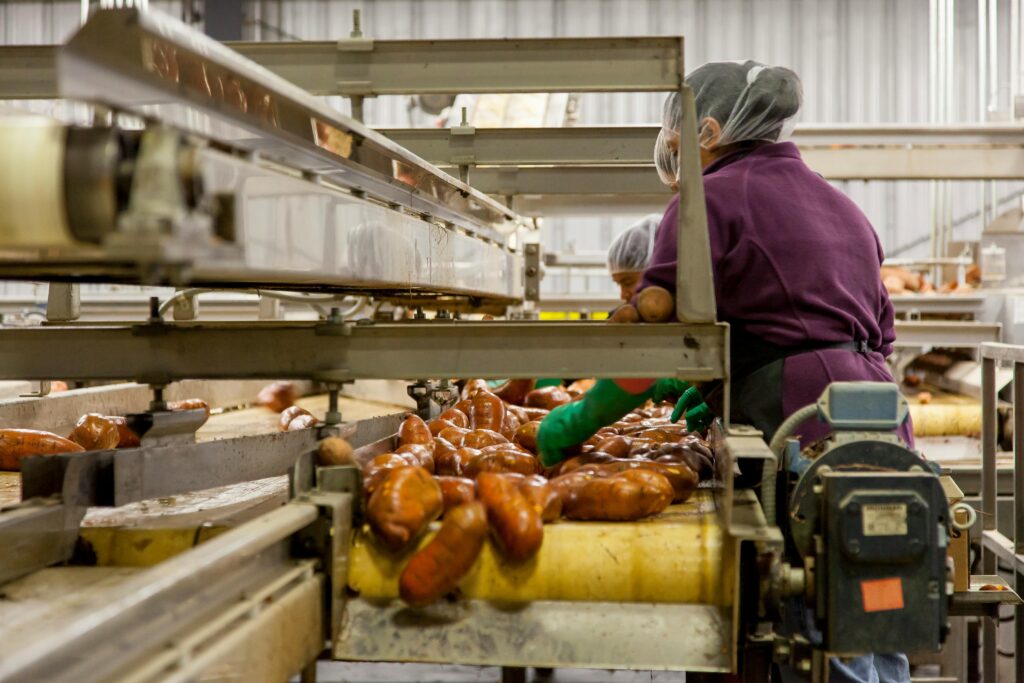
To build a scalable food brand, one must invest in the boring but essential work of institutionalization. This means creating a culture where processes are followed not because the boss is watching, but because the system demands it. Documenting every step of the production cycle from the temperature of the raw material arrival to the pressure of the packaging seal is what separates a local vendor from a global player. Consumers are remarkably unforgiving of inconsistency. A single bad batch can undo years of brand building. Therefore, the transition from manual to systemized production is not an option; it is a requirement for anyone serious about regional or international expansion.
The Regulatory Frontier: Compliance as a Barrier to Entry
A common mistake among early-stage founders is viewing regulation as a hurdle to be cleared only when the business becomes “large enough.” This perspective is dangerously short-sighted. Food is one of the most heavily scrutinized industries globally for a reason: public health is at stake. In many African jurisdictions, the regulatory landscape is becoming increasingly sophisticated and stringent. Treating certifications and licenses as an afterthought often leads to catastrophic legal entanglements or the sudden seizure of inventory just as a business begins to gain momentum.
Leading startups recognize that regulatory compliance is not a burden; it is a mark of legitimacy that opens doors to formal markets. Engaging with food safety authorities early allows a business to build its facilities according to international standards from the ground up, rather than facing the prohibitive costs of retrofitting later. Furthermore, traceability – the ability to track a product back to its specific batch and origin is becoming a global prerequisite. By embedding these standards into their DNA early on, African food startups position themselves to compete not just locally, but on the global stage, turning compliance into a formidable barrier to entry for less disciplined competitors.
Data-Driven Vision: Moving Beyond Intuition
The final pillar of a scalable food enterprise is the rejection of guesswork. Too often, products are launched based on the founder’s personal preferences or anecdotal evidence from a small circle of friends. In a market as diverse and price-sensitive as Africa’s, this is a high-risk gamble. Understanding consumer behavior requires data. This includes granular insights into pricing elasticity, packaging preferences, and distribution nuances. For instance, a product that sells well in an upscale urban mall may fail completely in a peri-urban kiosk due to the lack of “single-serve” packaging or a higher price point.
Winning founders are those who obsess over market intelligence. They use data to segment their audience and tailor their distribution strategies accordingly. They understand that they are not just selling a product; they are solving a problem – be it the need for convenience, nutrition, or affordability. By measuring everything from shelf-velocity to consumer sentiment, these entrepreneurs can pivot their strategies based on evidence rather than ego. In the modern economy, information is the most valuable ingredient in the recipe.
The Road Ahead: Building Institutions, Not Just Businesses
The transformation of the African food landscape requires a fundamental shift in mindset. We must stop viewing food entrepreneurship as a “simple” or “traditional” sector and recognize it for what it is: a high-stakes integration of manufacturing, logistics, and technology. The startups that will define the next decade are those that choose structure over chaos. They are the ones that prioritize the building of systems, the nurturing of supply chains, and the rigorous management of capital.
Africa does not merely need more food; it needs better food systems. It needs enterprises that are built to last for decades, not just months. It needs founders who are visionaries in their goals but disciplined in their execution. The trillion-dollar opportunity is waiting for those who understand that scaling is a discipline, not an accident. As we look toward the future, the question for every entrepreneur in this space is no longer whether their food tastes good, but whether their system is strong enough to carry that taste to the world. The era of the food “hustle” is ending; the era of the food institution has begun.