
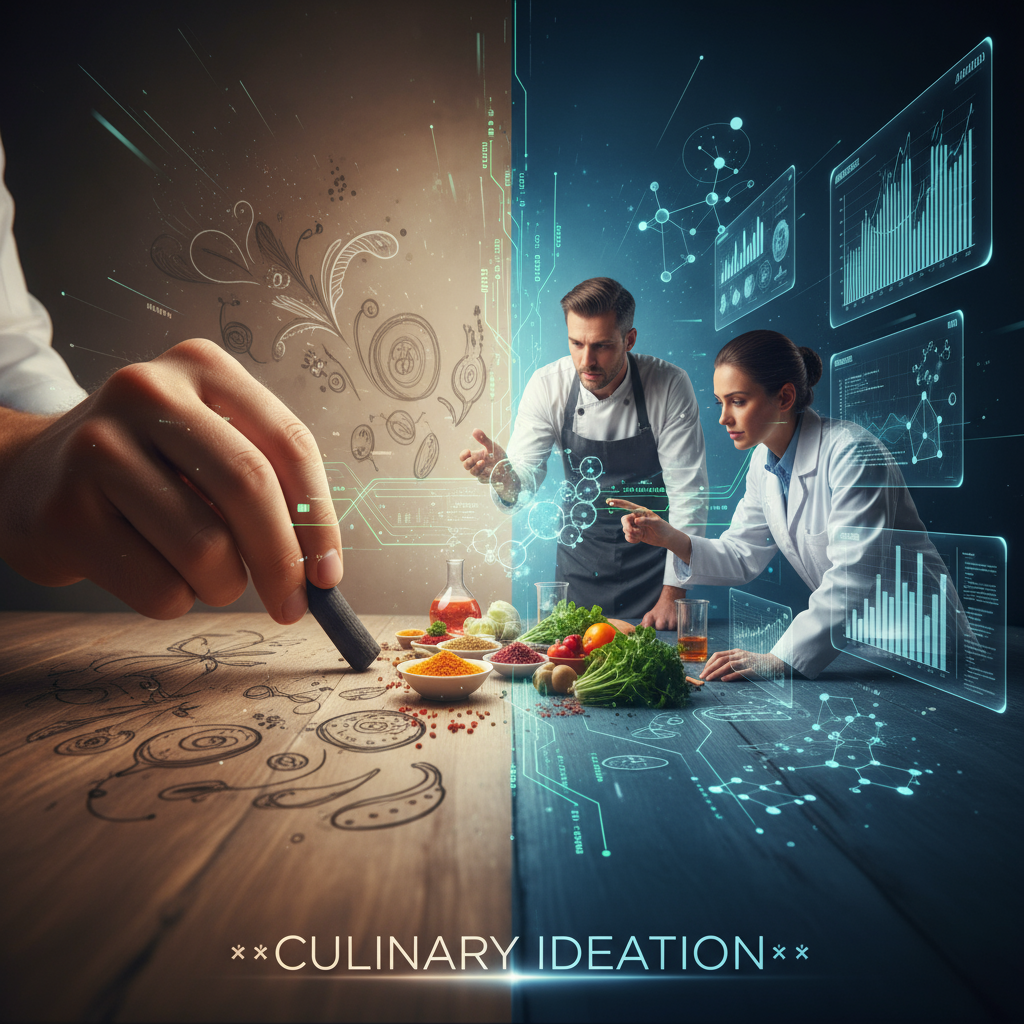
At Food Innovation Studio, culinary ideation is where creativity meets purpose. It is the deliberate practice of transforming inspiration into innovation, shaping the future of food through ideas that are imaginative, inclusive, and impactful.
The act of culinary ideation extends far beyond simply creating new dishes; it is the deliberate reimagining of how food can solve problems, tell stories, preserve cultures, and create connections. It is both an art form that honors the intuitive, cultural dimensions of food, and a science that applies systematic methodologies and data-driven insights. To create what’s next requires navigating this dual nature with both creative sensitivity and analytical precision.
The Three Dimensions of Culinary Creativity
Every successful food innovation process operates within three complex human and cultural dimensions.
1. Food as Cultural Expression
Food is never neutral; it is a fundamental expression of culture, identity, and memory. The power of a grain of rice, for example, lies not just in its calories but in its spiritual significance and economic importance across half the world.
- Cultural Competency in Innovation: This systematic process involves deep research into food traditions and consultation with cultural knowledge keepers before attempting to innovate. The goal is to enhance, rather than diminish, cultural authenticity.
- Ethical Innovation: A new food product must consider how it fits within existing food cultures, ensuring the innovation is respectful and supportive of the communities whose culinary heritage it touches.
2. The Sensory Landscape
Food engages all five senses simultaneously, creating a complex, multi-dimensional experience. The art of culinary ideation is manipulating this sensory landscape to evoke specific, meaningful responses.
- Sensory Science: Provides the tools to precisely measure and control factors like the optimal crispness frequency of a chip or the perfect melt temperature of chocolate.
- Cultural Context: The same texture that signals freshness in one culture might signal spoilage in another. Innovation must understand both the mechanics of perception and the cultural filters that shape how those perceptions are interpreted.
3. Nutritional Architecture
The challenge is designing nutritional experiences that support human health across diverse populations. This requires moving beyond abstract numbers to understanding nutrition as a dynamic system of interactions.
- Synergy and Bioavailability: Nutritional innovation lies in creating foods that deliver optimal nutrition while remaining appealing and accessible. This might involve using traditional fermentation to enhance the bioavailability of nutrients or combining ingredients to maximize nutritional synergy.
- Design for Health: The goal is to design a Future of Food where optimal nutrition is integrated into foods that are already culturally appropriate, sensorially appealing, and economically accessible.
Systematic Innovation: The Science Behind the Art
The systematic side of culinary ideation adapts methodologies like Design Thinking to ensure that creative visions become viable realities.
Design Thinking in Culinary Context
The innovation process begins with deep empathy for the consumer and the context in which food is eaten:
- Empathy and Observation: Going beyond traditional market research to include ethnographic observation—seeing how families navigate meal preparation or how local vendors adapt recipes.
- Problem Definition: Clearly articulating the functional, cultural, or environmental challenge the innovation must solve (e.g., creating satisfying protein with minimal environmental impact).
- Prototyping and Testing: Developing test versions of products and subjecting them to rigorous testing, including sensory analysis, nutritional analysis, and cultural validation processes.
Augmented Creativity and Data-Driven Insights
Modern culinary ideation uses technology to expand human possibility. This is “augmented creativity”—combining human insight with technological tools.
- AI and Flavor Mapping: Machine learning algorithms analyze vast databases of flavor compounds to identify novel pairings that human intuition might miss.
- Nutritional Optimization: Software suggests ingredient modifications to improve health outcomes while ensuring palatability.
- Human Judgment: Technology suggests the possibilities, but human and cultural judgment determines whether those pairings are appropriate, enjoyable, and accepted by real people.
The Innovation Cycle: From Idea to Plate
The creative process in food product development is a continuous, collaborative, and iterative cycle.
Collaboration and Co-Creation
The most powerful innovations emerge from collaboration, bringing together diverse expertise:
- Diverse Teams: Traditional knowledge keepers understand cultural context, food scientists explain molecular function, and social entrepreneurs ensure sustainable business models.
- Community Partnership: Innovation must be done with communities, especially when working with traditional foods, ensuring that communities benefit from and maintain control over how their food traditions are shared.
Iterative Development and Learning
Culinary ideation requires continuous cycles of creation, testing, feedback, and refinement.
- Quantitative Feedback: Sensory evaluation provides precise measurements of preference (taste, texture, aroma).
- Qualitative Feedback: Observation reveals how people interact with new foods in real-world contexts: Do they use it as a snack or breakfast? Do they share it? This real-world adoption reveals opportunities for further innovation.
Future Tools: Bridging Technology and Tradition
The future of food innovation is being shaped by technologies that offer immense potential while demanding cultural sensitivity.
- Biotechnology & Precision Fermentation: These tools allow for the creation of traditional flavors or novel ingredients with reduced environmental impact, but their deployment must serve human and cultural needs rather than simply commercial interests.
- Advanced Manufacturing: Technologies like 3D food printing and precision fermentation allow for personalization and customization—creating foods tailored to individual nutritional needs or cultural preferences—revolutionizing distribution and production.
- Regenerative Innovation: The focus must shift to creating foods that actively regenerate natural and social systems. This means innovations must enhance biodiversity, improve soil health, and strengthen community resilience, expanding success metrics beyond just taste and profit.
The fundamental principles that guide effective culinary ideation—respect for cultural knowledge, integration of expertise, and dedication to sensory and nutritional value—will remain constant. By balancing creative passion with scientific rigor, we can ensure that the Future of Food is not just technologically advanced, but culturally rich, environmentally sustainable, and socially just.