
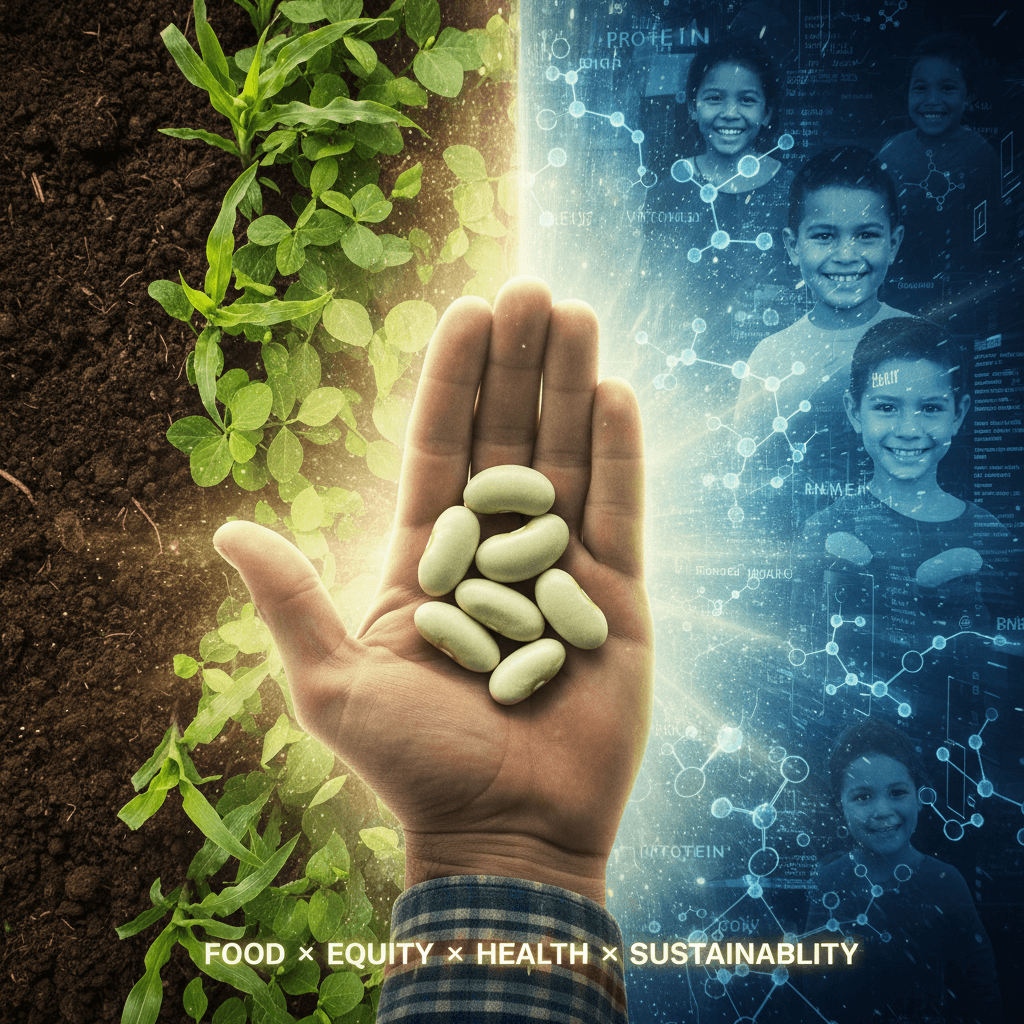
Beans climate change solution may not be the phrase that comes to mind when you think of superfoods – but it should be. In the bustling markets of Nairobi, the colorful displays of kidney beans, black-eyed peas, and green grams tell a story that extends far beyond their humble appearance. These small, protein-packed legumes represent one of humanity’s most powerful tools for addressing our most pressing global challenges—from climate change and malnutrition to poverty and social inequality.
Yet despite their extraordinary potential, beans remain dramatically undervalued and underutilized in our global food system. The question is not whether beans can change the world; it is whether we have the vision to unlock their full potential. Beans are not just food; they are an essential beans climate change solution and a key to social justice.
The Nutritional Revolution Hidden in Plain Sight
Beans are nutritional powerhouses, providing superior, affordable nutrition where it is needed most.
Affordable, Accessible Nutrition
A single cup of cooked beans provides 15-20 grams of high-quality protein, along with substantial amounts of fiber, folate, iron, potassium, and zinc. This density makes them invaluable in addressing “hidden hunger” (micronutrient deficiencies) that affects over 2 billion people worldwide.
- Complete Nutrition: Traditional food pairings like rice and beans, or dal and rice, have long utilized the synergistic relationship between grains and legumes, providing all essential amino acids needed for human health.
- Affordability & Storage: Unlike expensive animal proteins or processed supplements, beans can be grown locally, stored for months without refrigeration, and prepared with minimal resources, making them a crucial food security buffer for the 800 million people facing chronic hunger.
Water and Protein Efficiency
Beans offer a powerful solution to the growing environmental unsustainability of animal protein.
| Protein Source | Water Required per Kilogram | Protein Efficiency Ratio (vs. Beef) |
| Beef | $\approx 15,000$ liters | 1x (Benchmark) |
| Beans | $\approx 1,800$ liters | $\approx 8$x less water |
This dramatic difference in water use makes them an indispensable part of any sustainable plant-based protein strategy for a water-scarce world.
Beans Climate Change Solution: Champions in the Field
The transformative potential of beans is clearest in their role as climate champions, improving the environment rather than depleting it.
Natural Nitrogen Fixation
Unlike most crops that deplete soil nitrogen and require energy-intensive synthetic fertilizers, beans actually improve soil health through their unique ability to fix atmospheric nitrogen.
- The root nodules of bean plants host beneficial bacteria that convert atmospheric nitrogen into usable forms, effectively creating free, natural fertilizer for themselves and subsequent crops.
- When integrated into crop rotations, beans can reduce synthetic fertilizer requirements for the next crop by $30-50\%$, cutting both costs and greenhouse gas emissions associated with fertilizer manufacturing.
Emissions Reduction and Resilience
Bean production generates $90\%$ fewer greenhouse gas emissions than beef production per gram of protein. Globally, a shift toward legumes could reduce food-related emissions by up to $70\%$.
Furthermore, many traditional bean varieties are naturally drought-tolerant. In regions facing increasingly erratic rainfall, beans continue producing where traditional staples often fail, providing crucial resilience against climate change.
Economic Empowerment and Cultural Resilience
Beans represent an economic engine and a pathway to food sovereignty that directly addresses social inequality.
Economic Empowerment Through Value Chains
The global pulse market, valued at over $\$60$ billion annually, creates opportunities beyond farm-gate sales through value-added processing.
- Women’s Empowerment: In East Africa, women control $60-70\%$ of bean production. Investment in small-scale value-added processing (e.g., bean flour, protein concentrates) can multiply the economic value of raw beans by $3-5$ times, creating significant income for women entrepreneurs.
- Resilience and Stability: The shelf stability of dried beans provides a buffer against volatile markets, enabling small-scale enterprises to start small and scale gradually.
Food Sovereignty and Genetic Diversity
Beans support food sovereignty—the right of communities to define their own sustainable food systems. Traditional bean varieties carry crucial genetic diversity developed over thousands of years, providing irreplaceable resources.
- Climate Adaptation: This diversity offers natural resilience against new pests, diseases, and climate impacts, which is far superior to relying on a handful of high-yielding, uniform varieties.
- Cultural Bridge: Promoting traditional bean dishes strengthens cultural identity while addressing modern nutritional challenges, bridging cultural authenticity with modern convenience.
The Path Forward: Unlocking Global Impact
Realizing the potential of beans requires coordinated action across policy, research, and markets.
- Investment in Value Chains: Prioritize investment in local processing infrastructure and quality standards to ensure smallholder farmers can capture more value.
- Policy Support: Implement policies that recognize the multiple benefits of legume production, such as government procurement programs, updated nutritional guidelines, and agricultural policies that incentivize nitrogen-fixing crops.
- Consumer Education: Increase bean consumption, particularly in urban areas, through effective marketing that highlights the health and climate benefits (like the BeansIsHow campaign).
The humble bean represents proof that solutions to our most pressing global challenges often lie not in complex, expensive interventions, but in rediscovering and scaling the wisdom embedded in traditional food systems. The time has come to unlock the extraordinary potential of these small seeds and make them the foundation of a more sustainable, equitable, and nourishing food future for all.