
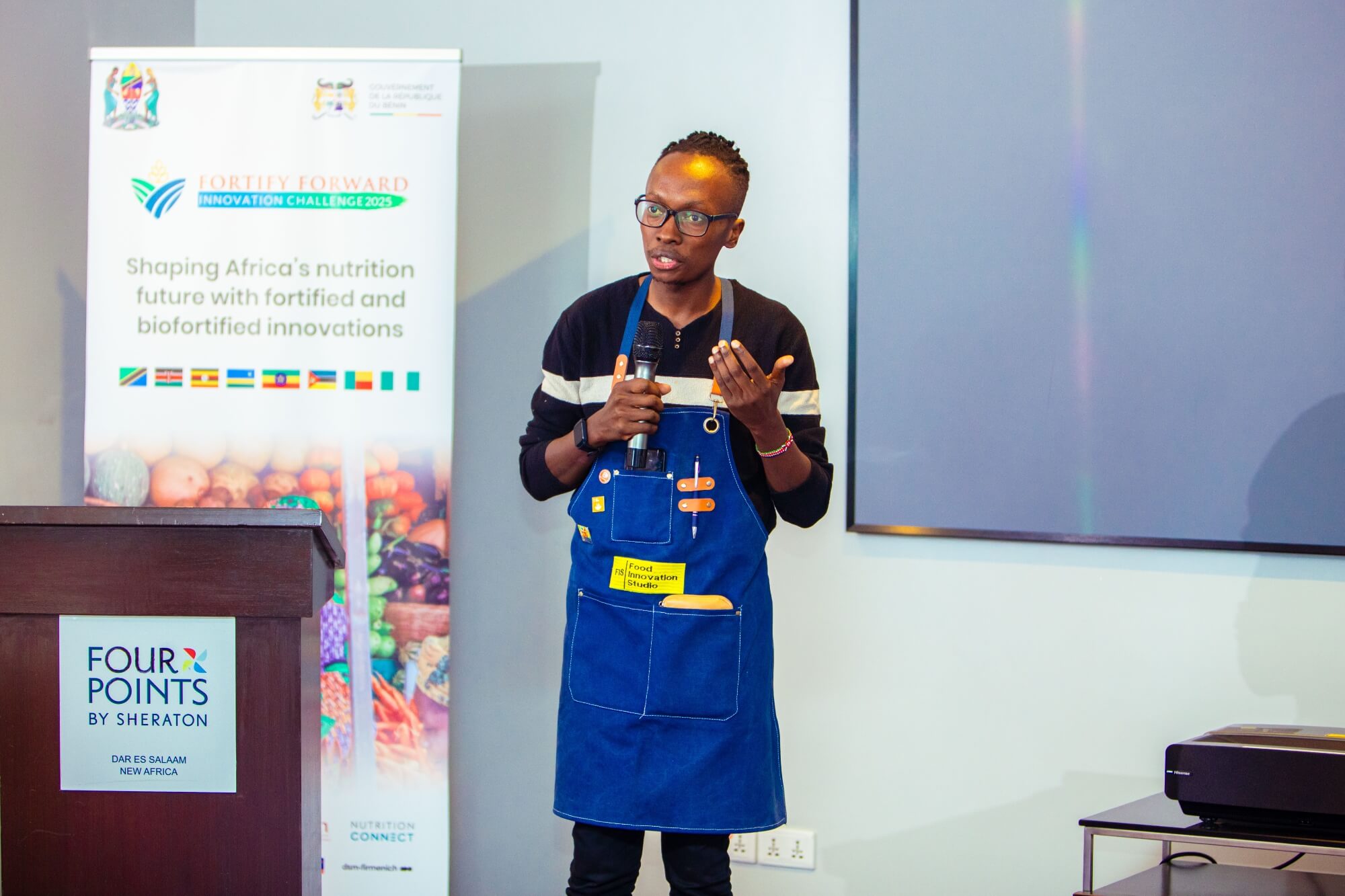
Dear friends, colleagues, and fellow champions of Africa’s food future,
As I write this note, I am filled with both urgency and hope. Urgency because across our beautiful continent, 282 million people still face hunger while we simultaneously waste 40% of the food we produce. Hope because I have witnessed firsthand the extraordinary innovation happening in kitchens, farms, and communities from Lagos to Nairobi, from Accra to Cape Town, where women and young people are reimagining what food can be and do for our continent.
Over the past decade, I have had the profound privilege of working across Africa’s food systems – from smallholder farms in rural Kenya to bustling food markets in Nigeria, from traditional kitchens preserving ancient wisdom to modern laboratories developing breakthrough solutions. Through every experience, one truth has become crystal clear: food is not just sustenance; it is our continent’s greatest canvas for innovation, economic empowerment, and social transformation.
This conviction led to the birth of The Food Innovation Studio, founded on the belief that Africa’s food future will not be secured by importing solutions from elsewhere, but by unleashing the creative potential that already exists within our communities, particularly among the women and youth who form the backbone of our food systems yet remain largely excluded from decision-making and investment opportunities.
We stand at an extraordinary inflection point in Africa’s food story. The challenges are real and pressing: climate change is altering rainfall patterns and threatening traditional farming practices; rapid urbanization is changing how and what people eat; and global supply chain disruptions have exposed our dangerous dependence on food imports. Yet within these challenges lie unprecedented opportunities for transformation.
Africa’s population is projected to double by 2050, with 60% of that growth concentrated in cities. This demographic shift represents both our greatest challenge and our most powerful asset. Young Africans are not just consumers of food; they are innovators, entrepreneurs, and change-makers who see possibilities where others see problems. They are developing climate-smart farming techniques, creating nutritious foods from indigenous crops, and building digital platforms that connect farmers directly to consumers.
Similarly, African women, who produce 70% of the continent’s food yet own less than 20% of the land, are demonstrating remarkable innovation in food processing, preservation, and marketing. From women’s cooperatives in Ghana transforming cassava into high-value products to female entrepreneurs in Rwanda developing fortified foods for children, women are proving that when given access to resources and opportunities, they can drive transformative change across entire food systems.
At The Food Innovation Studio, we approach food as a blank canvas – a medium through which we can paint solutions to some of Africa’s most pressing challenges while celebrating the rich cultural heritage that makes our food systems unique. This philosophy recognizes that innovation is not about replacing traditional knowledge with modern technology, but about creating synergies between ancestral wisdom and contemporary science.
Consider the humble cowpea, known locally as black-eyed peas or niébé. For centuries, African women have understood its nutritional value and developed countless ways to prepare it. Today, young food scientists are discovering how to enhance its protein content, extend its shelf life, and create new products that appeal to urban consumers while maintaining its cultural significance. This is the kind of innovation that honors the past while building the future.
Or take the example of indigenous grains like fonio, teff, and finger millet. These crops, cultivated by African farmers for millennia, are naturally drought-resistant and nutritionally superior to many imported grains. Yet they have been marginalized by food systems that prioritize wheat, rice, and maize. Through strategic innovation – developing better processing equipment, creating appealing recipes, and building market linkages – we can restore these crops to their rightful place in African diets while creating economic opportunities for the farmers, mostly women, who grow them.
This approach to innovation is fundamentally different from the top-down, technology-first models that have often failed to create lasting change in African food systems. Instead, it starts with people – their needs, their knowledge, their aspirations – and builds outward from there. It recognizes that sustainable food innovation must be culturally grounded, economically viable, and environmentally regenerative.
When we talk about securing Africa’s food future, we must center the conversation on women. This is not just a matter of equity – though equity is essential – it is a matter of effectiveness. Women are already the primary innovators in African food systems; they simply lack the recognition, resources, and platforms to scale their innovations.
In my travels across the continent, I have met women who are developing solar-powered food dryers in Senegal, creating nutritious baby foods from local ingredients in Uganda, and establishing seed banks that preserve indigenous varieties in Ethiopia. These women are not waiting for permission to innovate; they are solving problems in their communities with creativity, resourcefulness, and deep understanding of local needs.
Yet despite their central role in food production and innovation, women face systematic barriers that limit their impact. They have limited access to land, credit, and markets. They are excluded from agricultural extension services and technology training programs. Their innovations are often dismissed as “traditional” rather than recognized as sophisticated solutions to complex problems.
The Food Innovation Studio is committed to changing this narrative. Through our investment vehicle, we prioritize funding for women-led food enterprises. Our consulting services include gender-responsive approaches that ensure women’s voices are heard and their innovations are valued. Our innovation hub provides platforms for women to share knowledge, build networks, and access the resources they need to scale their solutions.
We have seen the transformative power of this approach. When women have access to capital, technology, and markets, they don’t just improve their own livelihoods – they strengthen entire communities. They invest in their children’s education, improve household nutrition, and create employment opportunities for other women. They are the multipliers of impact in food systems transformation.
If women are the foundation of Africa’s food innovation, young people are its accelerators. Africa’s youth population – the largest in the world – brings energy, creativity, and digital fluency to food systems that have often been resistant to change. They see opportunities where others see obstacles, and they have the technological skills to turn ideas into scalable solutions.
Young Africans are already revolutionizing food systems across the continent. In Kenya, youth-led startups are using artificial intelligence to help farmers optimize crop yields and predict weather patterns. In Nigeria, young entrepreneurs are developing mobile apps that connect smallholder farmers directly to urban consumers, reducing the need for middlemen and increasing farmer incomes. In South Africa, young food scientists are creating plant-based proteins from indigenous legumes, tapping into growing global demand for sustainable protein sources.
What excites me most about working with young food innovators is their systems thinking approach. Unlike previous generations who might focus on single solutions, today’s youth understand the interconnected nature of food challenges. They recognize that addressing hunger requires not just increasing production, but also reducing waste, improving nutrition, creating jobs, and protecting the environment. They are developing holistic solutions that address multiple challenges simultaneously.
However, young people also face significant barriers to participation in food innovation. Many lack access to land, capital, and the tools to build. Traditional agricultural institutions often fail to engage them effectively, and there are limited pathways for young people to enter and advance in food-related careers. The brain drain phenomenon means that many of Africa’s brightest young minds migrate to other continents or other sectors, taking their innovative potential with them.
The Food Innovation Studio addresses these challenges by creating pathways for youth engagement in food innovation. Our educational programs provide young people with the skills, knowledge, and networks they need to become food system leaders. We offer mentorship opportunities that connect young innovators with experienced practitioners. Our investment activities include dedicated funding for youth-led enterprises, recognizing that young entrepreneurs often need different types of support than established businesses.
As we look toward the future, several key opportunities and imperatives emerge for food innovation in Africa. First, we must leverage technology to leapfrog traditional development pathways. Just as mobile phones allowed Africa to skip landline infrastructure, digital technologies can help us build more efficient, transparent, and inclusive food systems. From blockchain platforms that ensure food traceability to artificial intelligence systems that optimize supply chains, technology offers powerful tools for transformation.
Second, we must prioritize climate resilience in all our innovation efforts. Climate change is not a future threat in Africa – it is a present reality that is already affecting food production and security. Our innovations must help food systems adapt to changing conditions while also contributing to climate mitigation. This means developing drought-resistant crops, promoting regenerative farming practices, and reducing food waste and emissions throughout the value chain.
Third, we must ensure that innovation serves nutrition as well as production goals. Africa faces a triple burden of malnutrition – undernutrition, micronutrient deficiencies, and rising obesity – that requires sophisticated solutions. We need innovations that make nutritious foods more accessible, affordable, and appealing, particularly for children and pregnant women who are most vulnerable to malnutrition.
Fourth, we must build stronger linkages between rural and urban food systems. As Africa urbanizes, we risk creating a disconnect between food producers and consumers that undermines both rural livelihoods and urban food security. Innovation can help bridge this gap through improved transportation and storage infrastructure, digital marketing platforms, and urban agriculture initiatives that bring food production closer to consumers.
Finally, we must ensure that innovation is inclusive and equitable. The benefits of food system transformation must reach smallholder farmers, informal traders, and low-income consumers who make up the majority of Africa’s food system participants. This requires intentional efforts to include marginalized groups in innovation processes and to design solutions that meet their specific needs and constraints.
The transformation of Africa’s food systems will not happen automatically. It requires intentional action from all of us – innovators and investors, policymakers and practitioners, consumers and citizens. It requires us to see food not just as a commodity but as a vehicle for human development, environmental stewardship, and social justice.
To my fellow Africans, I call on you to embrace your role as food innovators. Whether you are a farmer experimenting with new techniques, an entrepreneur developing new food products, a researcher studying nutrition, or a consumer making conscious food choices, you have the power to contribute to food systems transformation. Your innovations, no matter how small they may seem, are part of a larger movement that is reshaping how Africa feeds herself and the world.
To our partners, investors and allies around the world, I invite you to join us in this transformation. Africa’s food innovation needs investment, but it also needs partnership based on mutual respect and shared learning. We have much to teach about resilience, creativity, and community-centered innovation, just as we have much to learn from experiences in other contexts.
To policymakers and institutional leaders, I urge you to create enabling environments for food innovation. This means investing in research and development, supporting entrepreneurship, promoting gender equality, and creating regulatory frameworks that encourage rather than hinder innovation. It means recognizing that food security is not just about production but about creating food systems that are sustainable, equitable, and resilient.
As I conclude, I am reminded of a conversation I had with a young woman farmer in Benin who was experimenting with intercropping techniques that increased both her yields and her soil health. When I asked her what motivated her innovation, she said simply, “I want my children to have better food than I had, and I want the land to be healthier for their children too.”
This is the spirit that drives food innovation in Africa – a deep commitment to creating a better future for the next generation. It is a spirit that recognizes that food is not just about feeding bodies but about nourishing communities, cultures, and dreams. It is a spirit that sees challenges as opportunities and obstacles as invitations to innovate.
The Food Innovation Studio exists to amplify this spirit, to provide platforms for these innovations, and to ensure that the creativity and wisdom of African women and youth are recognized, supported, and scaled. We believe that Africa’s food future is not something that will happen to us but something we will create together, one innovation at a time.
The canvas is blank, the brushes are in our hands, and the colors are as diverse and vibrant as our continent. Let us paint a future where every African has access to nutritious, culturally appropriate food; where our food systems regenerate rather than degrade the environment; where women and youth are recognized as the leaders they already are; and where innovation serves not just efficiency but equity, not just profit but people and planet.
This is our moment. This is our opportunity. This is our responsibility. Let us seize it together.
With deep respect and boundless optimism for Africa’s food future,
Nicodemus Omundo
Founder & CEO, The Food Innovation Studio
The Food Innovation Studio is an integrated platform that combines strategic investment, expert consulting, and comprehensive education to advance culturally-grounded food innovation across Africa. Learn more about our work at foodinnovation.studio.